
From its earliest days, Wilshire understood missions not simply as charity, but as participation in God’s work of justice, compassion and beloved community.
At its founding in 1951, the church committed to giving at least 10 percent of undesignated offerings to missions through the Southern Baptist Convention’s Cooperative Program. Groups such as Girls’ Auxiliary, Royal Ambassadors, Brotherhood and Woman’s Missionary Union helped shape generations of members into people attentive to the needs of neighbors near and far.
Wilshire’s earliest mission efforts reflected an expanding vision of care, supporting ministries in Korea and Hispanic ministries at home. In 1954, the church raised funds to help missionaries Dr. and Mrs. Edwin Low purchase a medical truck for their work in Nigeria. The congregation supported missionary families as extensions of its own community, sending Ross and Doryce Coggins and later commissioning Bill and Dellanna O’Brien for service in Indonesia. Even during major building campaigns, Wilshire repeatedly exceeded its annual Lottie Moon offering goals.
In the 1960s, Wilshire partnered with First Mexican Baptist Church of Dallas through the BGCT, with members volunteering weekly through tutoring and practical support. When floods damaged an Edinburg, Texas, church in 1967, Wilshire responded with money, supplies and volunteers, reflecting a growing commitment to showing up where suffering existed.
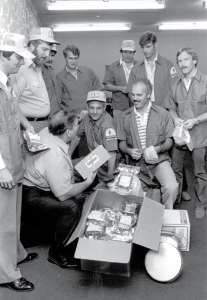 By the 1970s, mission engagement became increasingly hands-on, relational and global. Members traveled to build churches, Youth Choir participated in mission tours, and partnerships stretched from Texas to New Orleans to Cairo. In 1975, amid the refugee crisis following the Vietnam War, Wilshire sponsored the Pham family, providing housing, financial assistance and practical support. After tornadoes struck Wichita Falls in 1979, members assisted recovery efforts, while another team traveled to Dominica following Hurricane David. The church also designated a house on Springside Lane for missionaries on leave.
In 1990, Wilshire adopted an alternative missions funding plan beyond the SBC and joined the Cooperative Baptist Fellowship in 1991, reflecting a desire for a broader, more collaborative and justice-centered approach to Baptist life.
Missions became increasingly visible in Wilshire’s daily life after the church called its first minister of missions, Nona Bickerstaff, in 1992. Others who have served in this role are Karen Gilbert, Jason Coker, Mindy Logsdon and, since 2013, Heather Mustain.
By the 2000s, Wilshire’s mission work emphasized refugees, housing justice and community development. Members supported Albanian refugees in Macedonia and Kosovo, participated in Habitat for Humanity projects in West Dallas and traveled on trips to Kenya, the Dominican Republic and Galveston after Hurricane Ike. The church helped launch church plants and organized initiatives such as a 2008 peanut butter drive that collected more than 10,000 jars for the North Texas Food Bank.
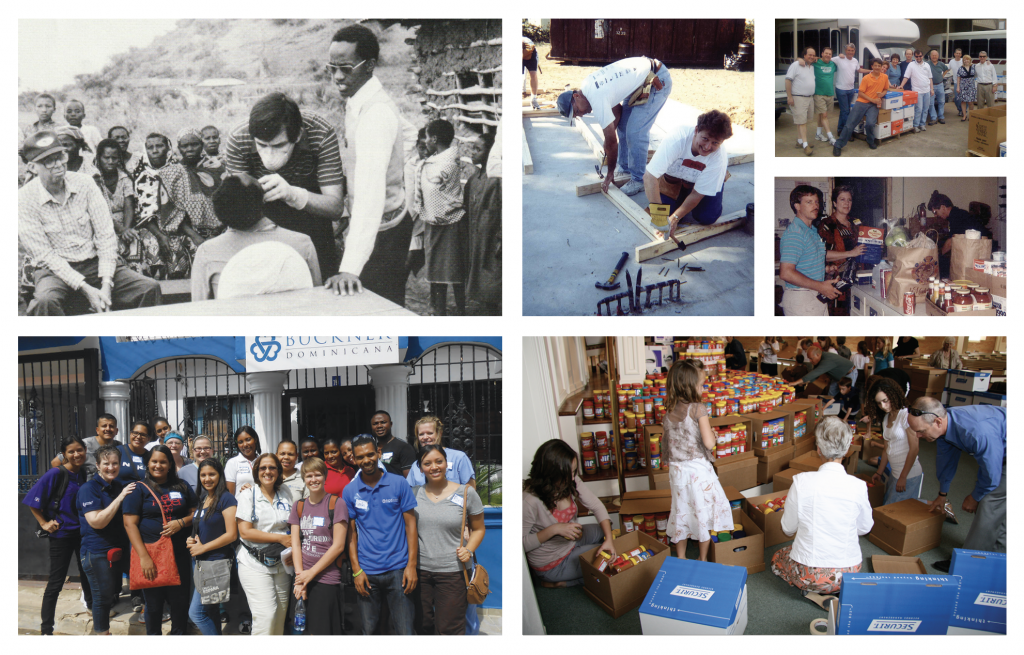
In the 2010s and beyond, advocacy and justice became even more central to Wilshire’s mission identity. Partnerships with Friendship-West Baptist Church and Temple Emanu-El fostered interfaith and interracial collaboration around issues such as predatory lending and civil rights. Mission efforts expanded to include advocacy grants, Room in the Inn, and partnerships in Tanzania and Macedonia.
Today, Wilshire continues to adapt its mission work to meet emerging needs. The church established a rental assistance program for housing-insecure neighbors and joined initiatives such as In Deed and Truth, embracing practices that encourage deeper reflection on history, justice and reconciliation. Mission trips to Puerto Rico and annual efforts such as Souper Bowl of Caring and MLK Day meal packing demonstrate that while Wilshire’s vision of mission continues to evolve, it remains grounded in the conviction that God calls communities of faith to love boldly, serve humbly and work for the flourishing of all people.